


Scott Aquilino
Duration: 4 Sprints
Context and Problem
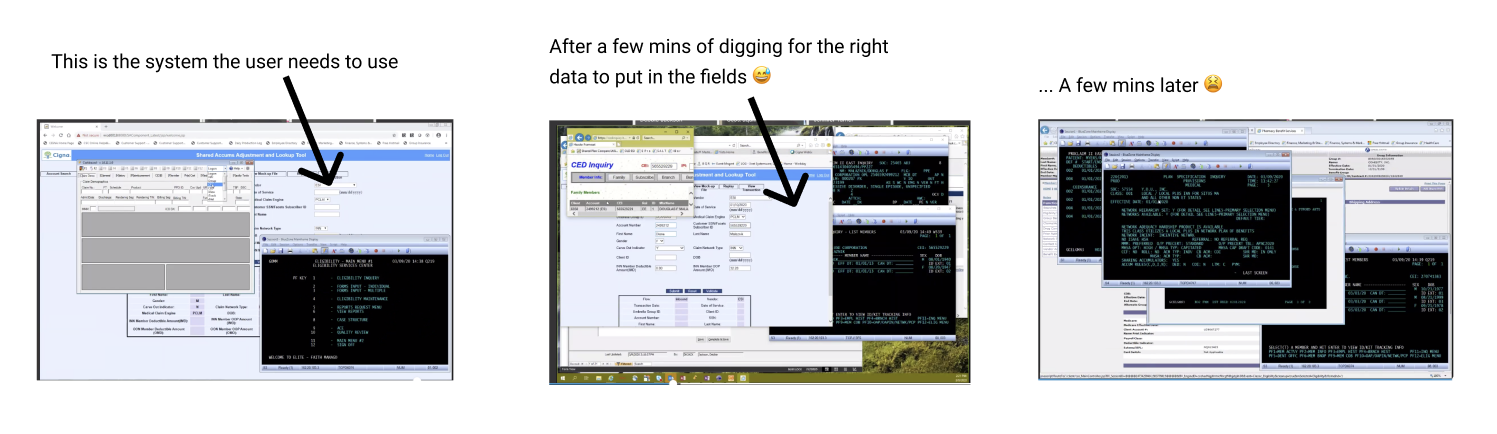
Cigna’s claims adjustment process relied on fragmented backend systems, making it difficult for analysts to determine accurate member balances and resolve claims confidently. As the Lead Product Designer, I partnered across Product, Engineering, and Data to simplify complex workflows and establish a clearer, more reliable path to resolution.
Key Questions & Core Problems
- How might we reconcile conflicting data across multiple claims platforms into a single, trustworthy view?
- How can analysts quickly understand what matters without navigating multiple disconnected systems?
- How do we reduce errors and rework in high-stakes financial decisions?
- How might we improve consistency in outcomes for members across teams and workflows?
Opportunity
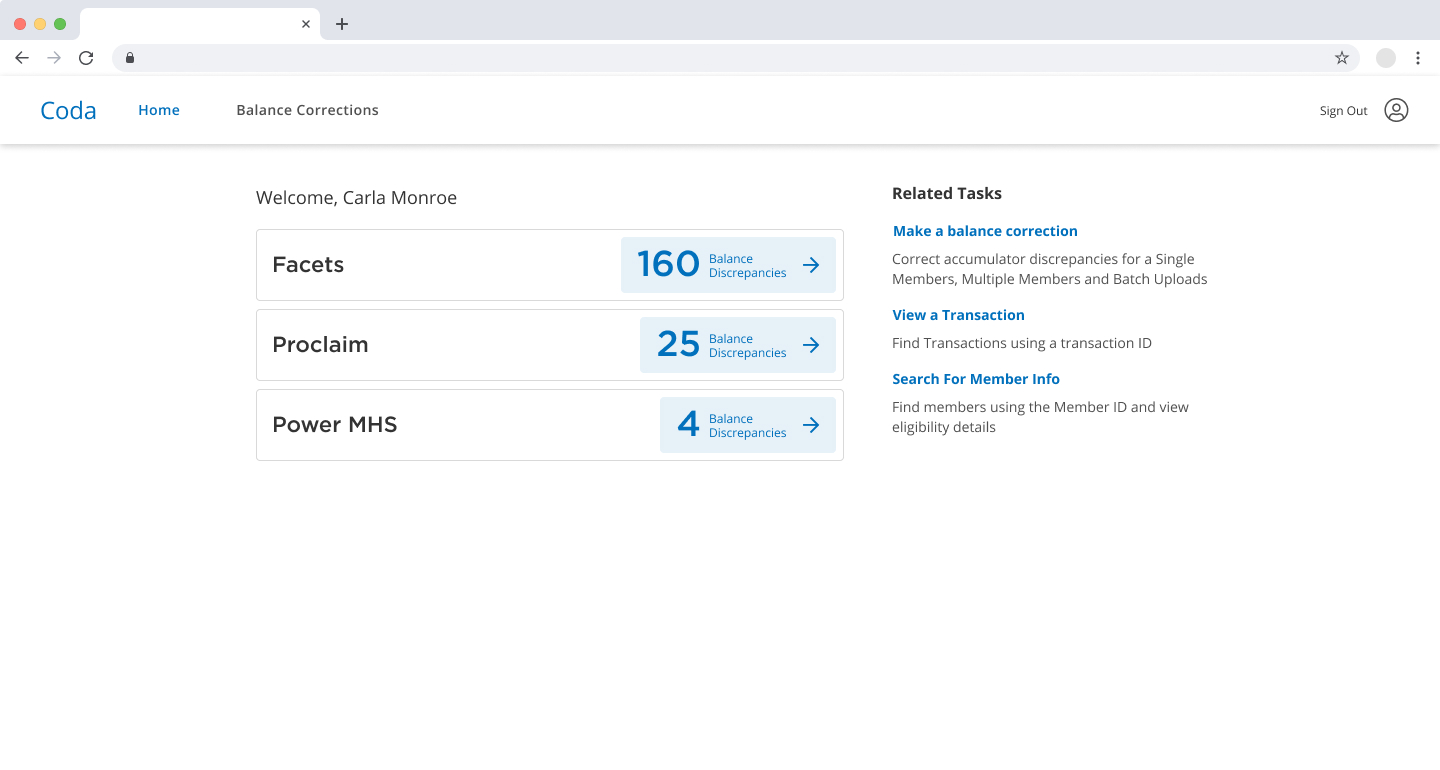
- Establish a centralized system of truth that simplifies decision-making and enables more consistent, scalable claims resolution.
Process
Framing the Problem Across Systems
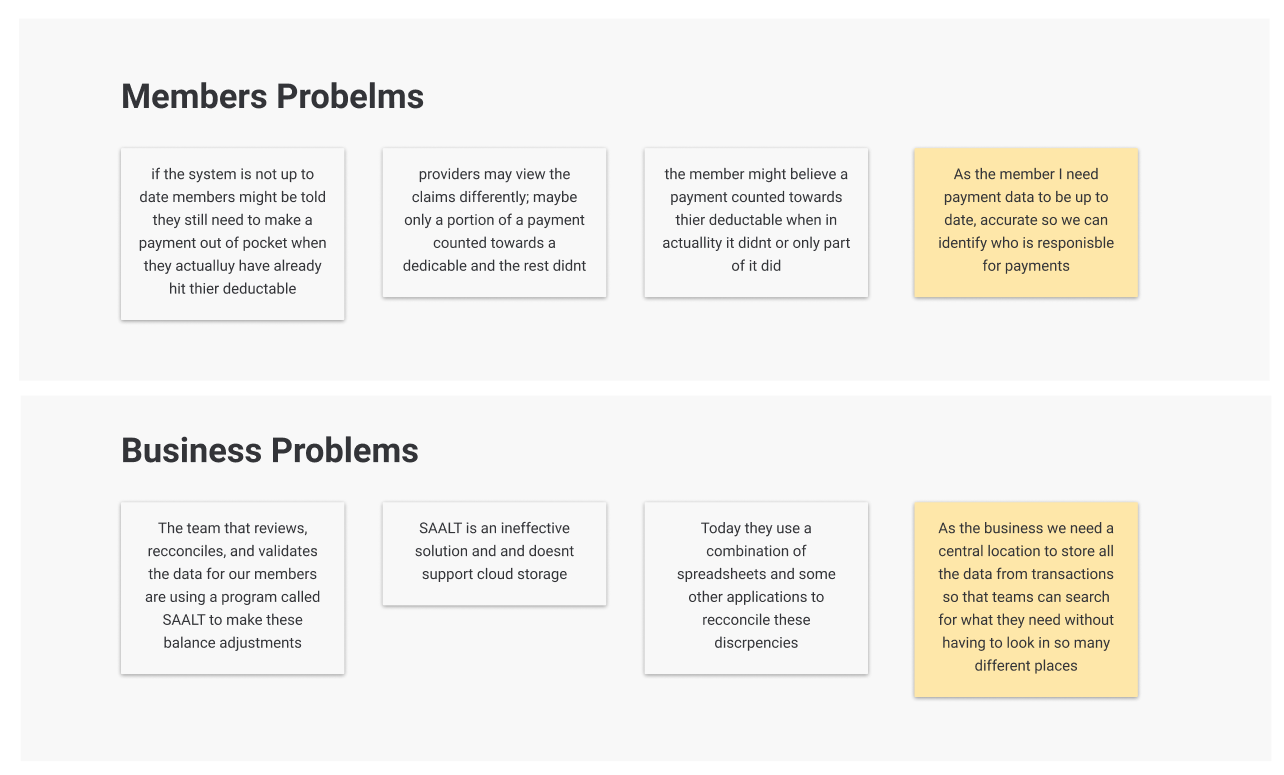
We aligned on the problem space through cross-functional discovery and grounded it in both user and member impact.
- Conducted interviews across multiple operational teams to map real-world workflows
- Synthesized fragmented processes into a shared understanding of system-level gaps
- Reframed the problem to include both analyst usability and member trust
Aligning Data, Product, and Engineering
We partnered closely with Engineering and Data to identify what was feasible and where simplification could drive impact.
- Mapped current-state workflows and pressure-tested them with technical constraints
- Identified opportunities to consolidate data sources into a unified experience
- Aligned on a phased approach that balanced ambition with system limitations

Designing for Clarity at Scale
We focused on reducing cognitive load and helping analysts quickly interpret complex data relationships.
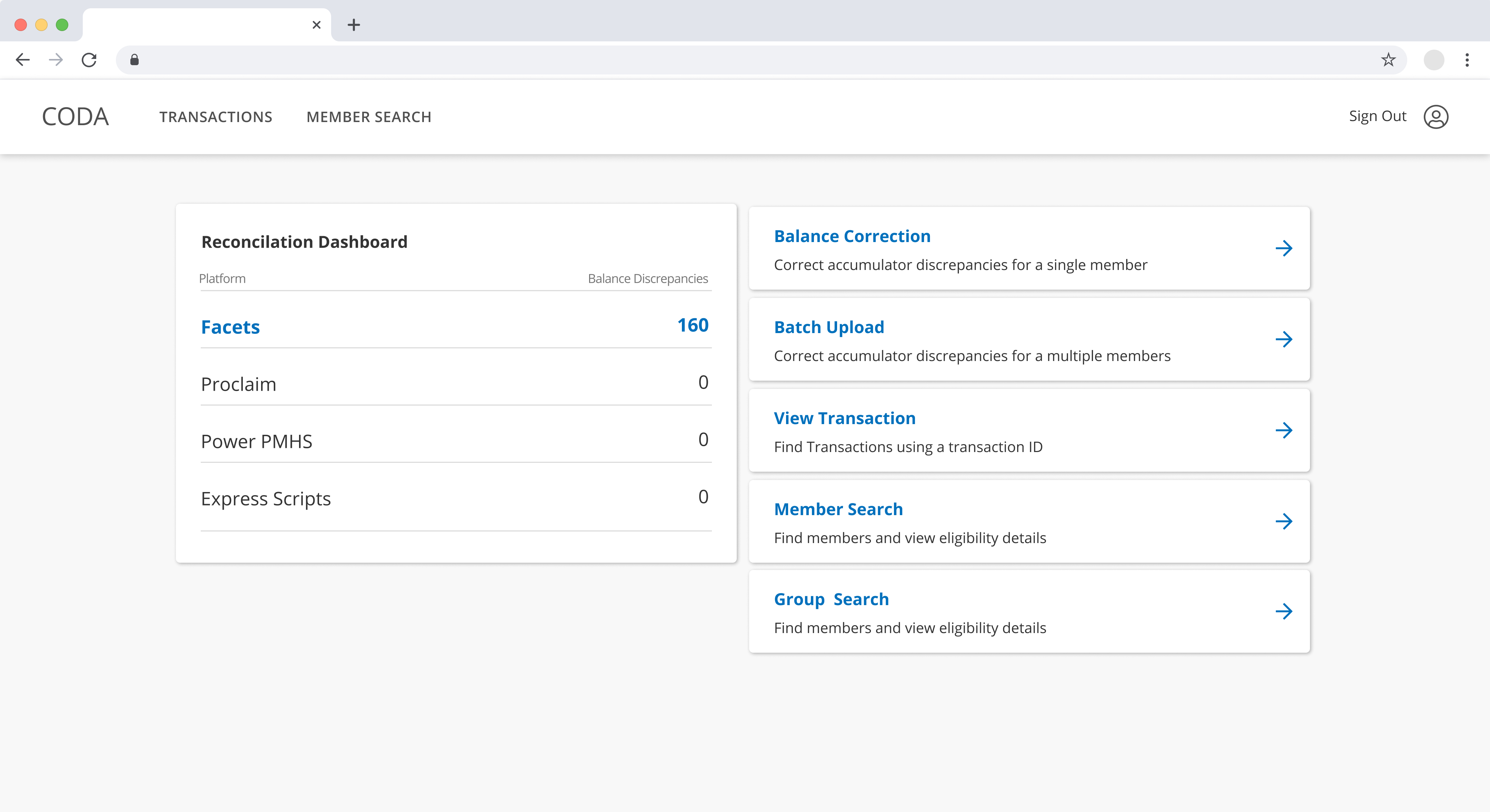
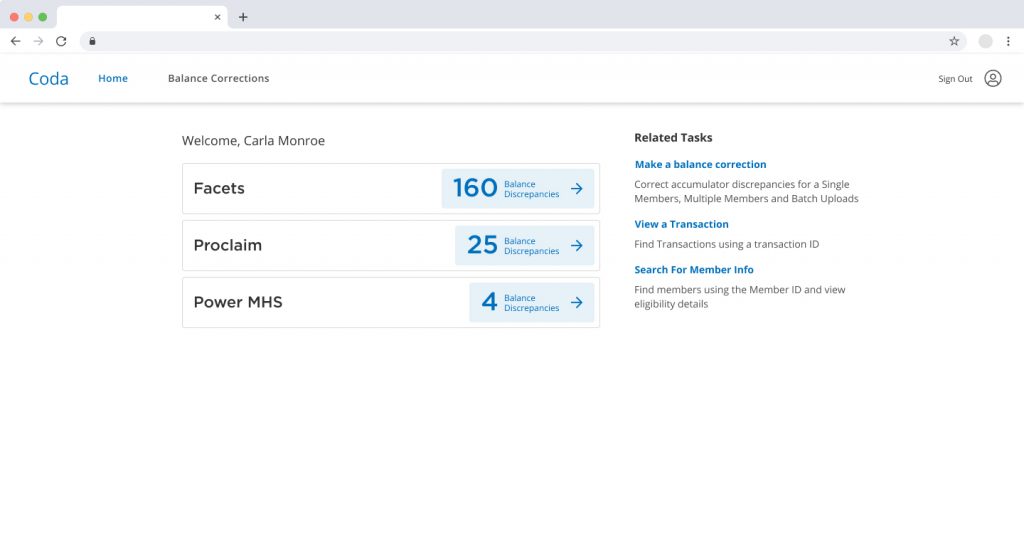
- Introduced a centralized dashboard to surface discrepancies and prioritize work
- Structured progressive drill-downs to move from high-level issues to actionable detail
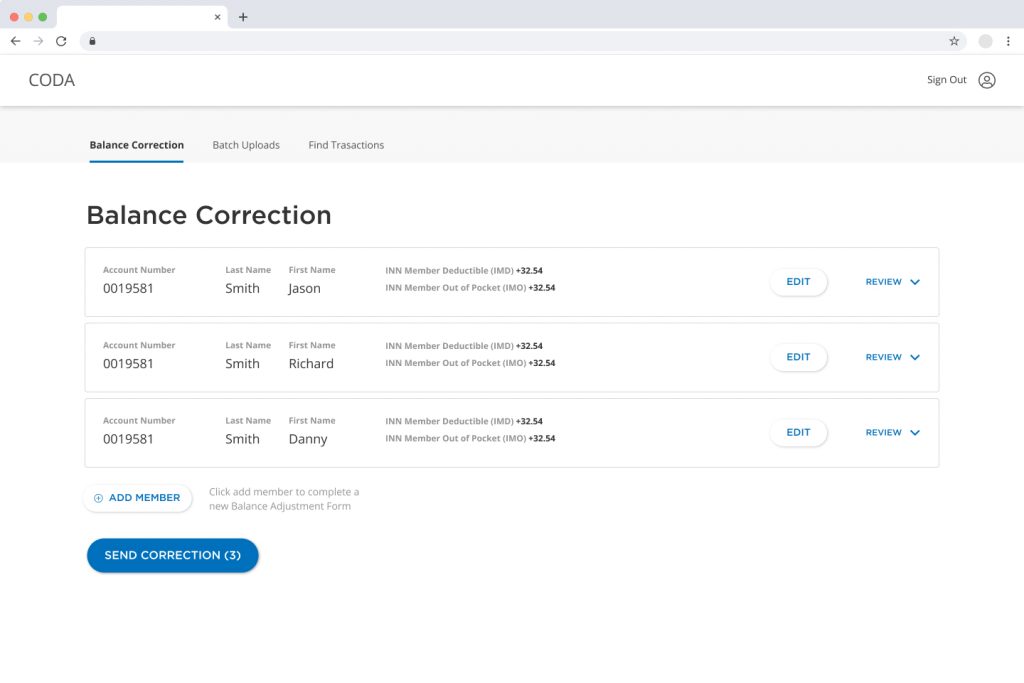
- Simplified workflows to reduce unnecessary steps and surface only relevant data


Iterating Through User Feedback
We used rapid prototyping and testing to validate assumptions and refine usability.
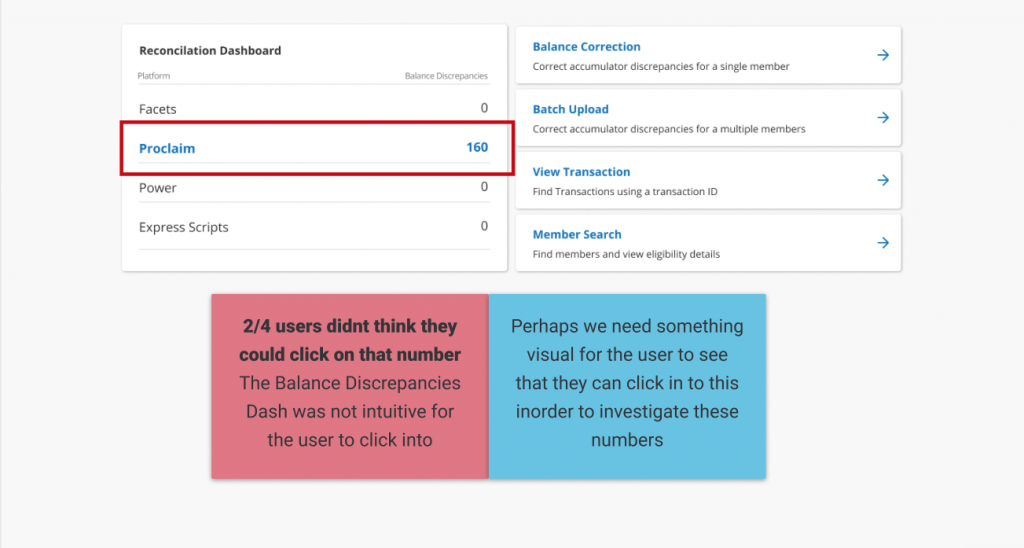
- Identified key usability gaps around navigation, hierarchy, and interaction clarity
- Refined interaction patterns to make workflows more intuitive and self-evident
- Improved onboarding through design rather than relying on training or documentation

Driving Smarter Product Decisions
User insights helped challenge initial requirements and refocus investment.
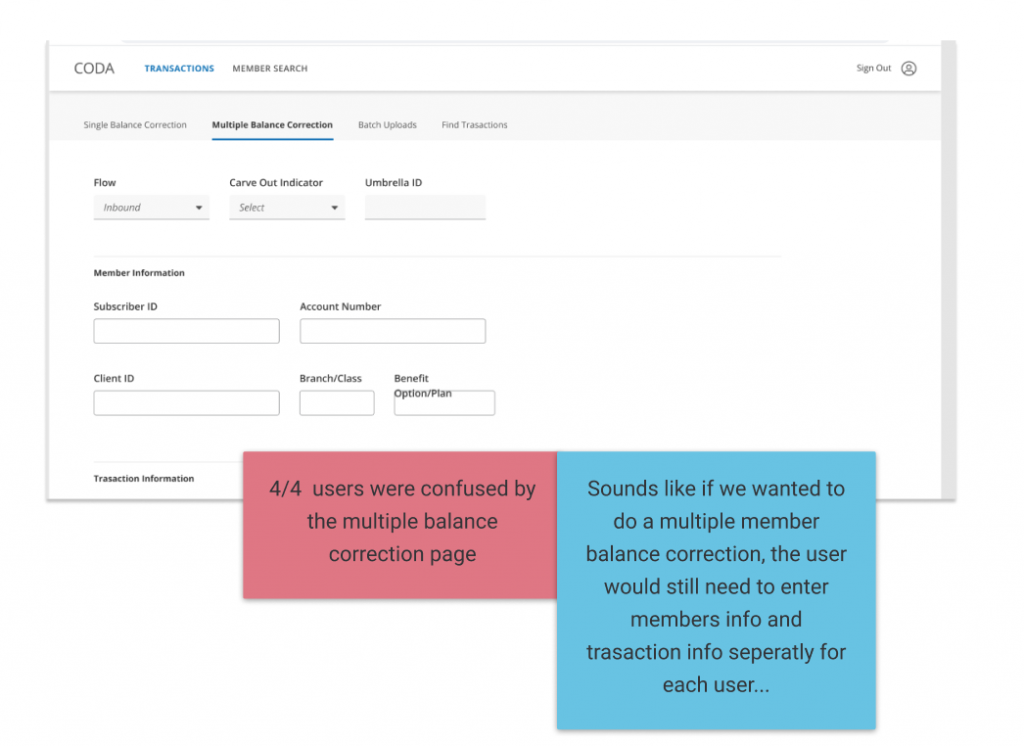
- Validated that certain workflows (e.g., multi-claim entry) were rarely used in practice
- Influenced scope by removing low-value features, saving ~2 sprints of development
- Redirected effort toward higher-impact areas that improved core workflows
Results
This work shifted the product from a fragmented toolset to a more cohesive system, improving how teams approached claims adjustments.
- Delivered a clearer, more scalable workflow adopted across claims adjustment teams
- Strengthened alignment between Product, Engineering, and Operations around a shared system vision
- Elevated design’s role in shaping product direction and influencing roadmap priorities
Outcomes
The redesigned experience improved efficiency, accuracy, and consistency in claims resolution.
- Reduced average adjustment time by 20% (from ~12 minutes to 9–10 minutes)
- Decreased rework by 25%, improving first-pass accuracy
- Increased single-touch resolution rates from 60% to 80–85%, reducing member friction